Momentum is growing for the transition to 2D codes for point of sale scanning. As retailers get excited about opportunities to reduce waste and improve traceability, being ‘2D’ ready can give brands a competitive advantage. Packaging can become less cluttered, while brands can also leverage QR codes to improve customer engagement by adding links to social media and product information.
The shift from 1D to 2D codes raises a number of key considerations, however. From cell sizes to data content, package real estate to product shapes, there are multiple factors that can affect the quality - and hence scan success - of the code.
In this blog we explore these factors and explain the implications for existing production lines.
Scanning Experience
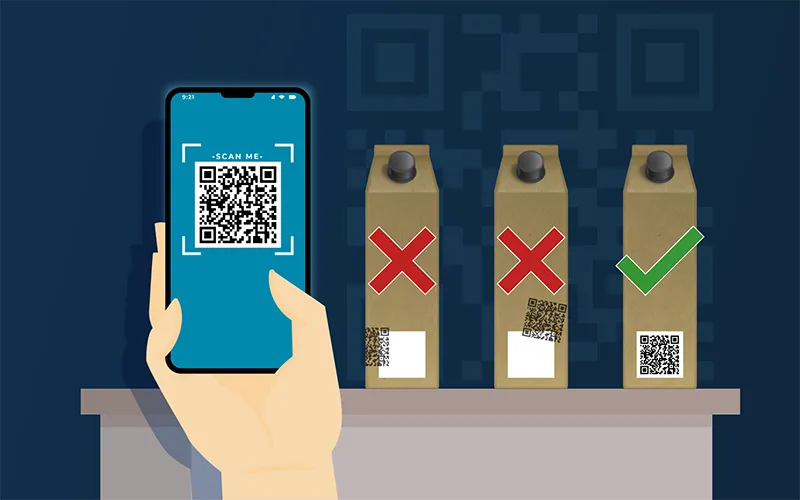
The evolution from 1D to 2D is a step change. For producers in the UK, adopting 2D codes will present a chance to get ahead of the competition and potentially unlock new business relationships. Adding significant data to the code can free up package space as well as improving traceability and customer engagement.
The more granular the product information, the greater the benefit; but a consistent scanning experience is vital. For customers at the point of sale or using their mobile phone to open social media links or workers throughout the supply chain, scanning must be fast and consistent. And there are several issues that must now be considered.
Cell size
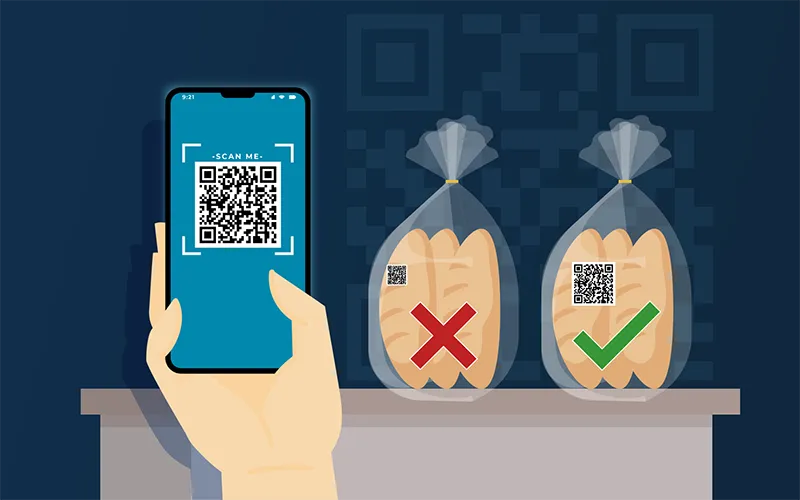
The conflict between the brands’ ‘smallest possible’ cell size preferences to meet the packaging aesthetic and supermarkets’ demands for larger cells that are easy to see and quick to scan is nothing new. The move to QR codes adds further considerations. The goal is not just to achieve a sub 50 millisecond scan but to deliver a consistent customer experience. Yet, as discovered during recent Domino pilot tests, different QR cell sizes require the customer to move closer to the scanner or further away, to make it scan. This not only undermines the rapid scan objectives but creates unacceptable customer friction. Domino is working with the market to drive consensus on the optimum cell size to create a consistent customer experience.
During these pilot projects we have also discovered that the way ISO standards for barcodes perform has also changed with the 2D model. ISO/EIC 15415 provides specific guidelines for the verification and quality of 2D barcodes to reinforce readability and quality. Graded A to F, with A the highest quality, the goal in the past has been to achieve Grade A standard. Tests, however, have revealed 2D barcodes behave differently – codes that achieve Grade C actually scan more quickly that those rated Grade A. As such, the priority has switched from Grade A to ensure speed and consistency throughout the scanning experience.
Data content
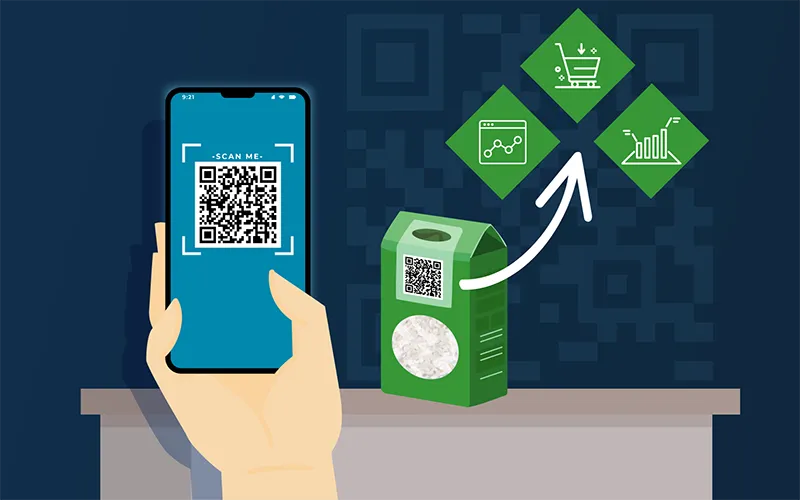
One of the most compelling aspects of the QR code is the ability to add diverse data elements, from use by dates to batch numbers and social media links. However, these benefits demand a new level of data rigour and control: incorrect data elements could stop a product from scanning with the inevitable ramifications for profit, retailer and end user relationships.
GS1’s new standard for QR codes offers excellent flexibility, allowing brands to create and use codes according to their individual needs. There are specific guidelines for additional data content; however, syntax errors are common. For example, GS1 requires expiry dates to use yy.mm.dd but European brands typically use dd.mm.yy for expiry dates. Embedding this expiry date in the 2D code is a core component of the supermarkets’ demands and key to their waste reduction plans. Brands need to ensure additional data rigour is in place to ensure correct syntax is used within all data streams to avoid scan failure.
Package real estate and shape
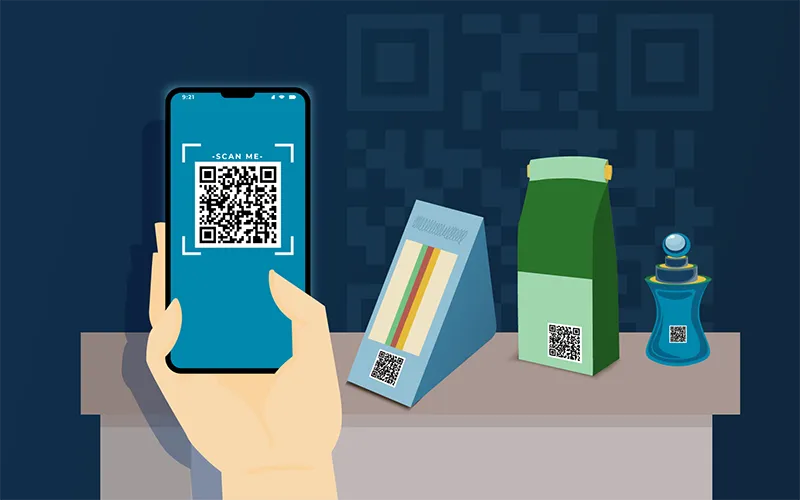
Packing innovation and the creation of unique designs has become an important component of brand value and differentiation. This has been facilitated by the flexibility of traditional print models, where 1D codes containing fixed data are pre-printed and inline print of human readable information such as Best Before can be achieved with print heads located up to 15mm away and direct onto curved surfaces, recesses, even creases.
2D codes are more demanding. QR codes can only print on flat products and the print head must be almost touching the packaging at the point of print. In addition to being within 1mm of the print head, environmental factors will affect quality. The process needs to be conducted at the correct temperature and products must be free of condensation. To achieve the high quality, high resolution QR codes required, unique packaging designs may have to change. Indeed, the entire printing technology and process may have to be overhauled.
Given the time, cost and complexity associated with changing packaging real estate and product design, it is really important for brands to quickly and accurately assess current processes and identify any potential areas of redesign. In addition, QR codes demand a new level of quality assurance. The potential cost of a batch failing to scan will be very significant - including the risk of supermarket penalties - and companies need to consider the value of continuous inline verification to replace incremental manual checks.
Conclusion
Supermarkets are beginning to set supplier specific timelines for adopting 2D codes. While the pressure to change is increasing, trying to cut corners in any of these areas can lead to long-term issues. What additional implementation work is required? What is the brand looking to achieve?
To minimise line disruption, it’s important to consider all the additional data elements that can be embedded within the QR code. While this is a chance to improve consumer engagement, meet sustainability targets and improve traceability, building in this functionality from the start, rather than trying to change a system later is key. And that will involve multiple areas of the business – from engineering, IT, production, quality, packaging to logistics, legal and marketing.
The transition to 2D codes is exciting but it is also complex. It will take planning, collaboration and the right partner to successfully make the transition.